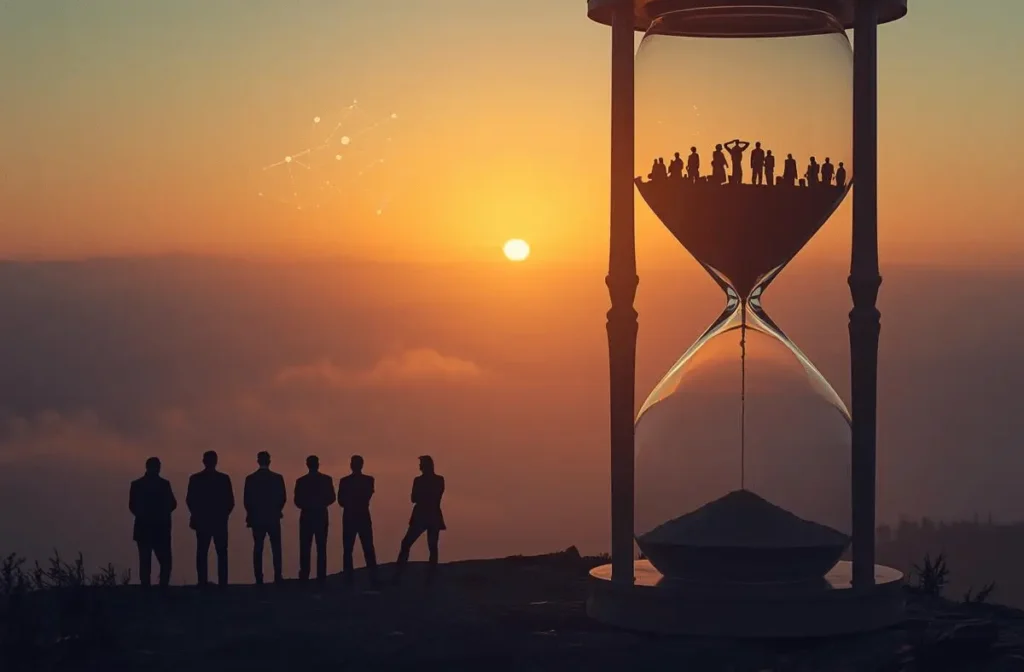
A quiet but profound change is underway in the foundations of global strength.
The shrinking workforce global power dynamic is reshaping how nations, systems, and societies sustain influence and prosperity in the years ahead.
For generations, economic and geopolitical power grew through expanding populations and labor forces. More people meant greater output, consumption, and capacity. This pattern shaped policies, strategies, and expectations worldwide.
That pattern is now shifting.
Demographic decline global economy realities are becoming impossible to ignore. Many societies face slowing or contracting working-age populations. Birth rates have fallen. The natural growth in available workers is no longer what it once was.
This creates a new reality. The old assumption that endless labor expansion would carry growth forward no longer holds with the same force.
I see this shift as more than numbers on a chart. It touches the core of how we organize human effort, care for one another, and build lasting stability.
Understanding the New Equation
When the total number of working-age people stops growing rapidly, the mathematics of economic expansion change.
Societies once counted on adding large numbers of workers each year to increase total output. Today, many must learn to generate more value with fewer additional hands.
This tightening of the labor pool affects everything from innovation and infrastructure to healthcare and social support. It raises important questions about sustainability and human dignity in the long term.
The shrinking workforce global power reality does not mean inevitable decline. It signals the need for a deeper reorientation.
Future of global economic growth will depend far more on how effectively we develop and apply human capability than on simply increasing headcount.
Productivity gains in aging societies become central — not as cold efficiency, but as a way to honor existing talent while meeting collective needs.
The Limits of Short-Term Approaches
Many current discussions still treat demographic pressures as temporary issues that can be managed with familiar tools — stimulus, incentives, or quick policy adjustments.
These approaches have their place, yet they often overlook the longer horizon.
Thirty-year demographic realities point toward sustained changes in population structure. Higher dependency ratios. Greater pressure on systems that support both younger and older generations. Reduced flexibility in some areas of public spending.
In such conditions, leadership that remains focused only on immediate cycles carries risk. It may delay necessary adaptation rather than enable it.
Leadership in demographic crisis calls for something steadier — a willingness to look beyond the next quarter or election and consider what kind of societies we are building for the generations that follow.
Toward a More Conscious Foundation
The end of reliance on endless labor-driven growth opens space for a different kind of strength.
This new foundation rests on conscious investment in human potential. It values depth of contribution over sheer volume of workers.
Awakened leadership offers a path here. It encourages clarity about long-term realities while remaining rooted in care for people.
It supports the use of AI and advanced tools to augment human work — freeing capacity for creativity, judgment, care, and connection rather than routine tasks.
Awakened governance brings these elements together. It aligns economic policy, education, technology, and social systems so that progress benefits the whole of society, not just selected parts.
Awakened diplomacy can play a supporting role by fostering cooperation on skills development, knowledge exchange, and balanced approaches to demographic differences across borders.
None of this is about replacing humans. The idea here is to create conditions where human intelligence and technology work in harmony for shared well-being.
Reflective Questions for Leaders
Here are questions worth holding quietly:
- How is your organization or nation preparing for slower growth in the working-age population?
- What steps are you taking to support genuine productivity gains in aging societies?
- Which short-term pressures might you need to set aside to serve longer-term stability?
- How can governance structures better integrate human needs with technological change?
- In what ways can global cooperation help address demographic imbalances without losing local wisdom?
These questions are gentle invitations. They ask us to pause and consider the kind of leadership the present moment truly requires.
The Era We Are Entering
The shrinking workforce global power transition marks a significant turn in human affairs.
Old models built on continuous labor expansion are giving way. In their place emerges the possibility of more intentional, humane, and resilient systems.
This is a moment of reckoning for leadership. It invites us to move from reactive patterns toward greater presence and foresight.
The future of leadership will belong to those who recognize demographic realities clearly and respond with wisdom rather than fear or denial.
It will favor leaders who see the current shift not as a loss of scale, but as an opportunity to cultivate deeper human potential within existing populations.
As the pioneer of the Awakened Leadership and Founder of Awakened Leadership Movement, I continue to explore and share frameworks that support this evolution — frameworks that bridge soul-level clarity with practical governance and innovation.
The era of relying primarily on endless labor-driven growth is quietly closing.
The era of awakened global leadership — grounded in humanity, long-term responsibility, and shared potential — is opening.
Each of us who holds responsibility in any sphere now faces a choice: to meet this shift with clarity and care, or to let old assumptions guide us further into uncertainty.
The path ahead asks for both courage and compassion. It asks us to lead in ways that honor the full dignity of human life while building systems capable of sustaining it.
I invite you to reflect on these realities in your own context. The conversation about how we shape this future belongs to all of us.
Warm Regards