 We have grown so accustomed to being handed remedies that we forgot to ask who made us sick in the first place — and what medicine we have been given.
This is the quiet crisis of our time, and the hidden machinery behind the political placebo and nocebo effect.
Somewhere along the way, hope became a sedative. Fear became a leash. And both were handed to us with a smile, a slogan, or by hands we had learned to trust — or were forced to see as the only way.
The Political Placebo Effect — Healing That Heals Nothing
In medicine, a placebo creates the feeling of recovery without addressing the illness.
In governance, it works the same way.
A system built on hollow hope in governance keeps populations calm, compliant, and quietly decaying. The announcements come. The promises follow. The ceremonies happen.
And the structure continues to crumble underneath.
- Policies celebrated before they are implemented
- Progress measured in speeches, not in lives changed
- Hope distributed like a drug — enough to sedate, never enough to heal
There is a particular kind of exhaustion that settles in the bones of people who have carried something hollow for too long — quietly, without knowing why they are so tired.
That exhaustion is the cost of the political placebo effect.
The Political Nocebo Effect — Fear as a Governing Tool
The nocebo effect is darker.
Where placebo soothes, nocebo harms. And in the hands of power, manufactured fear in society becomes one of the most effective governing instruments ever used.
Leaders who understand this do not need armies at every door.
They need a population that believes the danger outside is greater than the danger within the system itself.
- An enemy is named — foreign, ideological, cultural, or economic
- The fear is amplified through media, policy, and repetition
- The leader arrives as the only barrier between the people and collapse
This is what leaders who sell fear do with precision.
They manufacture the wound. They arrive with the bandage. They ask for loyalty in return for protection from a threat they quietly built themselves.
“A system that heals through hollow hope is merely masking the decay of a failing structure; but a society ruled by manufactured fear is being actively poisoned by leaders who sell the symptoms as the only cure.” — SunDeep Mehra
How Societies and Failed Systems Sustain Themselves
Society and failed systems share one common survival mechanism —
They make the people forget what normal felt like.
When fear runs long enough, safety feels like a privilege. When hollow hope runs long enough, ambition feels naive. The baseline shifts. The people stop demanding because they stop believing demand is possible.
This is not accidental.
A population that cannot remember the light cannot organize around its absence.
Three patterns consistently appear across societies and failed systems:
- Redefining crisis — keeping populations in a permanent state of emergency so governance accountability becomes secondary to survival
- Controlling the vocabulary — when leaders name the problems, they also quietly name the only acceptable solutions
- Selling commitment as sacrifice — asking the people to endure in the name of a future the system has no intention of building
The Wound Nobody Wants to Name
Maybe the deepest wound a society carries is the one it never noticed — or never wanted to believe was a wound at all.
Delivered slowly. By the very hand that kept calling itself a cure, a promise, or a commitment.
The political placebo and nocebo effect works precisely because it borrows the language of care. It speaks in the vocabulary of protection, sacrifice, unity, and progress.
And it is nearly impossible to resist something that sounds like everything you were taught to want.
What This Asks of Every Person, Leader, and Society
This reflection is not a verdict. It is an invitation to look.
For individuals — Ask what you have been given and who benefits from you believing it is medicine.
For leaders — The weight of manufactured fear eventually crushes the system that built it. Societies governed through nocebo effects do not stabilize — they fracture, slowly, then suddenly.
For nations and governments — Hollow hope in governance is a borrowed timeline. Every system that survives on sedation eventually faces the moment the sedative wears off.
For cultures and societies — The most courageous thing a people can do is name what is hollow — and refuse to carry it further.
A Closing Thought
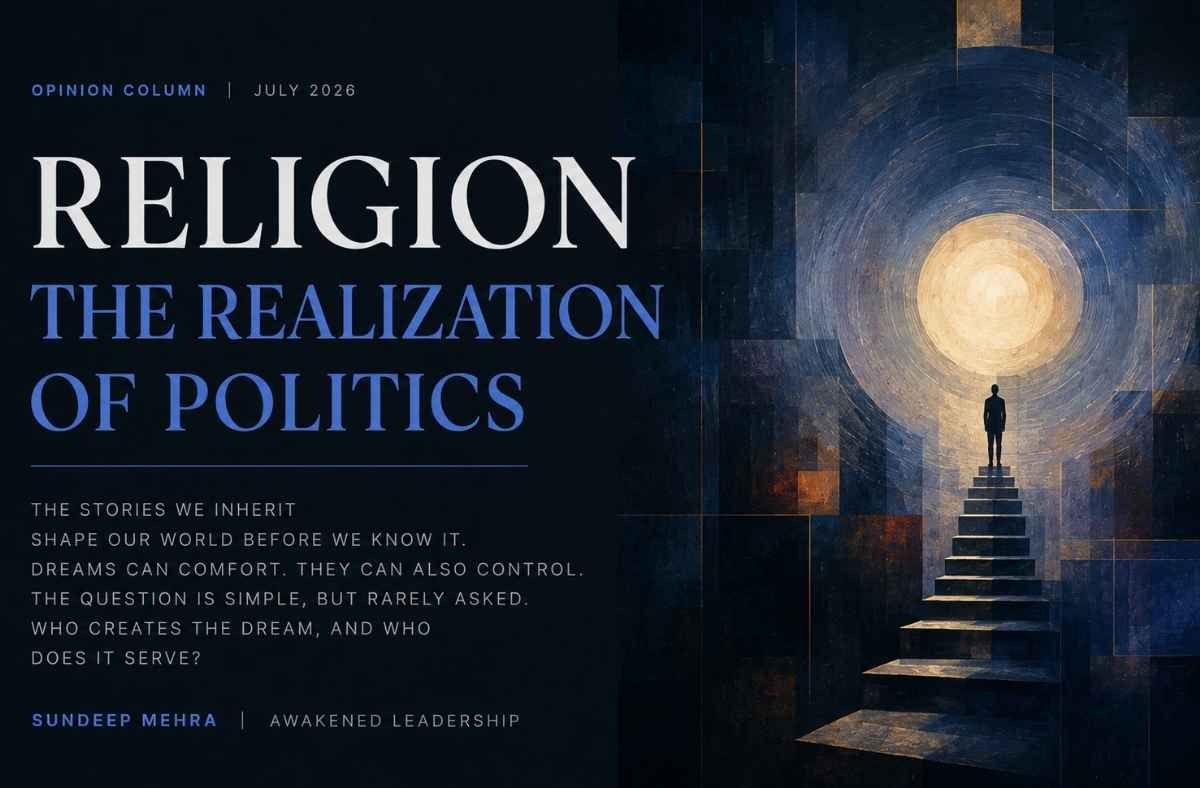
There is a particular kind of darkness that arrives dressed as protection, speaking in the language of safety, and stays until the people cannot remember what the light felt like.
The political placebo and nocebo effect thrives in that darkness.
Naming it is the first act of refusing it — and perhaps the first quiet step where Awakened Leadership begins, and Awakened Governance starts to align with its purpose.
Your turn.
What does this reflection surface for you — as a citizen, a leader, or simply a human being living inside a system?
Share your thoughts below. Every perspective adds to what this conversation is trying to become.
Pioneering Awakened Leadership and Governance