The Quiet Warning Behind India’s Present Moment
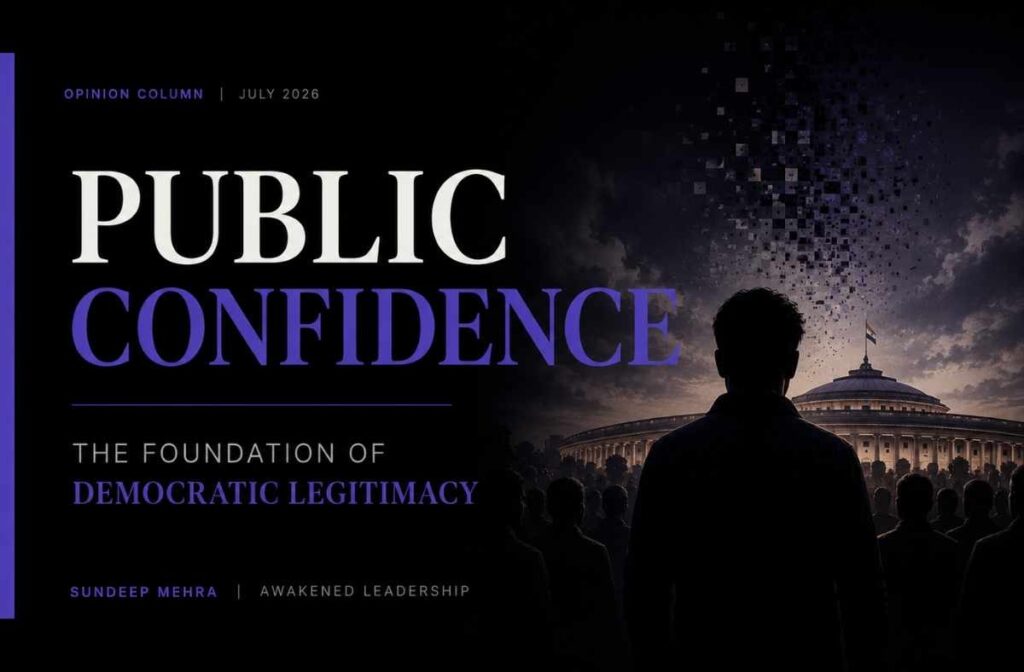
There are moments in the life of a nation when the headlines appear to concern a particular individual, a protest, a controversy, or a passing political disagreement, while something far more consequential is unfolding beneath the surface. History rarely announces structural change with dramatic certainty. More often, it disguises it as a sequence of disconnected events that appear significant only in retrospect. Governments continue to govern, elections continue to be held, institutions continue to perform their formal duties, and the architecture of democracy appears reassuringly familiar. Yet beneath that visible continuity, something less tangible begins to shift. Citizens slowly relocate their confidence away from the institutions created to represent them. By the time that movement becomes unmistakable, the erosion has already taken hold.
India may well be living through one of those moments.
That observation should not be read as a judgement upon one government, one political party or one ideological tradition. It is a democratic observation before it is a political one. Across the world, societies are confronting a common challenge. Institutions that once enjoyed inherited authority now find themselves required to earn public confidence continuously. Newspapers no longer possess an exclusive claim over truth.
Political parties no longer command lifelong loyalty. Universities, bureaucracies, courts, civil society organisations, regulators and even electoral institutions increasingly compete for public trust rather than assuming it. The relationship between citizens and institutions is being rewritten in real time, often without either side fully recognising that the contract itself has changed.
India matters because it offers one of the world’s largest and most influential laboratories in which that transformation is unfolding. Home to more than a billion people, a fiercely contested democracy and one of the fastest-changing digital societies on earth, its institutional evolution carries implications well beyond its borders. The future of democratic governance will increasingly be shaped not only by how nations exercise power, but by whether their institutions continue to deserve belief.
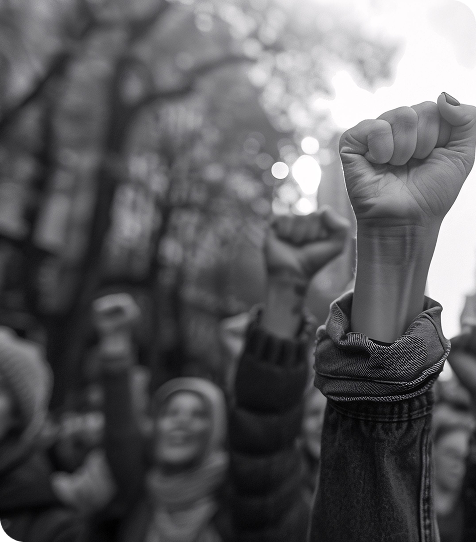
Viewed through that wider lens, recent public conversations surrounding figures such as Abhijeet Dipke deserve attention beyond the immediate circumstances that brought them into the national conversation. The lasting significance of such moments rarely lies in the individual concerned. Every democracy produces campaigners, critics, activists and independent voices. The more revealing question concerns the public response they generate. When ordinary citizens begin placing greater confidence in independent individuals than in established institutions, they are expressing something deeper than support for a particular cause. They are quietly revealing uncertainty about where credibility now resides.
The same democratic pattern has appeared in different forms through public movements associated with figures such as Sonam Wangchuk. Whether one agrees with every demand or every method employed is ultimately a secondary consideration. What deserves closer attention is the fact that substantial sections of the public increasingly look towards individual civic voices to articulate concerns that many believe institutional mechanisms have struggled to address with sufficient urgency. Whenever citizens begin searching outside established channels for reassurance that they have been heard, democracies should resist the temptation to dismiss the phenomenon as another passing controversy. It often reflects an evolving relationship between institutions and the society they were created to serve.
Healthy democracies are sustained by something more enduring than constitutional design or electoral success. They depend upon an invisible reserve of public confidence accumulated over years through competence, restraint, fairness and accountability. Trust is among the few democratic assets that cannot be legislated into existence. It develops gradually through conduct and can diminish with surprising speed when institutions appear more committed to defending themselves than understanding the society around them.
Periods of intense political polarisation often obscure this reality. Every controversy is quickly absorbed into the language of partisan competition. One political constituency celebrates while another condemns. Television studios transform complexity into confrontation. Digital platforms reward certainty over curiosity, speed over reflection and emotional intensity over patient examination. Before long, institutions themselves begin responding to the incentives created by permanent political conflict rather than the responsibilities for which they were originally established.
India’s constitutional framework was never intended simply to organise electoral competition. It was designed to preserve democratic confidence across generations despite inevitable political disagreement. Governments would change. Leaders would rise and fall. Political fortunes would reverse. The institutions of the republic were expected to provide continuity strong enough that citizens could continue believing in the democratic framework even when they disagreed profoundly with those temporarily entrusted with governing it.
That distinction deserves renewed attention because democracies rarely weaken through spectacular institutional collapse. Far more often, they experience the gradual erosion of institutional confidence while the visible machinery continues operating as before. Buildings remain occupied. Procedures continue. Elections are conducted. Courts function. Ministries issue statements. The visible architecture survives. What changes is the invisible relationship between citizen and institution. Once enough people conclude that official channels no longer hear them with sufficient seriousness, they begin constructing alternative channels through civic movements, independent campaigns, public intellectuals, local initiatives and informal networks of public participation. Many of these developments enrich democratic life. Their increasing prominence, however, frequently reflects institutional spaces that citizens perceive as insufficiently occupied.
This helps explain one of the quieter political transformations unfolding across democracies today. Increasing numbers of citizens appear less interested in ideological identity than in practical public outcomes. Water security, agricultural livelihoods, judicial accountability, environmental protection, public health, education, urban infrastructure, digital privacy and local governance increasingly command civic attention because they touch everyday life directly. Political formations organised around specific public concerns are emerging in many democracies because citizens are searching for institutions capable of responding with clarity and sustained commitment. Their appearance should not automatically be interpreted as a rejection of representative democracy. More often, it signals an attempt to recover democratic responsiveness where established structures are perceived to have become less attentive.
This shift reaches beyond electoral politics. It reflects a broader reordering of legitimacy itself. Earlier generations commonly trusted institutions first and evaluated individuals through institutional authority. Increasingly, citizens assess institutions through individuals whose credibility they have come to recognise independently. Authority now flows in directions that many twentieth-century democratic assumptions never anticipated. Constitutions can establish institutional frameworks. Laws can define powers and responsibilities. Only public confidence transforms those arrangements into living democratic relationships.
For that reason, India’s present moment deserves international attention. The country stands at the intersection of demographic scale, technological acceleration, geopolitical influence and democratic complexity. The questions now emerging within its public life are not uniquely Indian questions. They belong to a wider global conversation about how democratic societies preserve legitimacy in an age where information travels instantly, public expectations evolve rapidly and institutional authority can no longer depend upon historical reputation alone.
The deeper significance of India’s present moment therefore extends far beyond its borders. The world’s largest democracy is becoming a living laboratory for one of the defining questions of the twenty-first century: whether institutions can renew public confidence before citizens permanently relocate their trust elsewhere. Democracies seldom lose their way because elections suddenly disappear or constitutional texts lose their meaning. They begin to drift when the institutions entrusted with public purpose gradually cease to command public belief. India has not reached that point, yet the warning is already visible for those prepared to look beyond the noise of daily politics. Whether its institutions respond with humility, renewal and a willingness to strengthen the relationship they hold with the public will shape far more than India’s democratic future. It will offer lessons for every nation seeking to preserve the fragile bond between power, legitimacy and the people in whose name both ultimately exist.