Version 1.0, September 2025
Executive Summary of the China Taiwan Conflict Solution
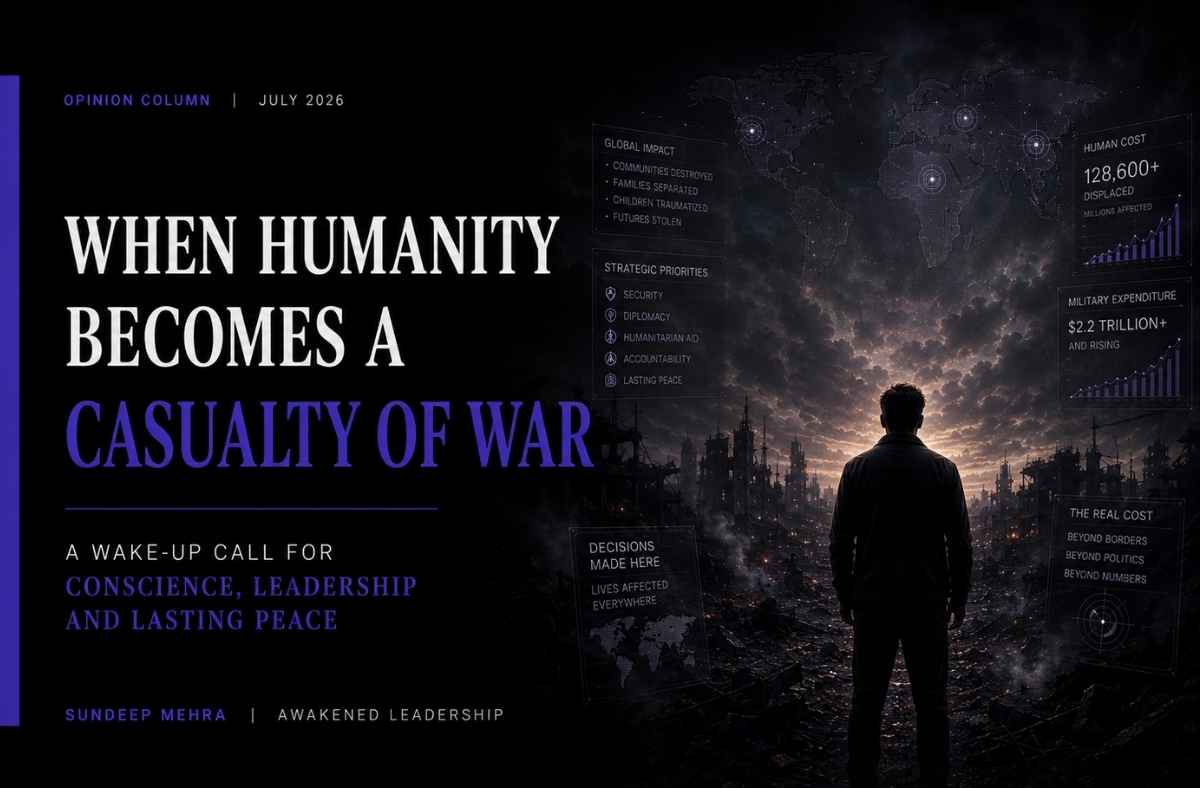
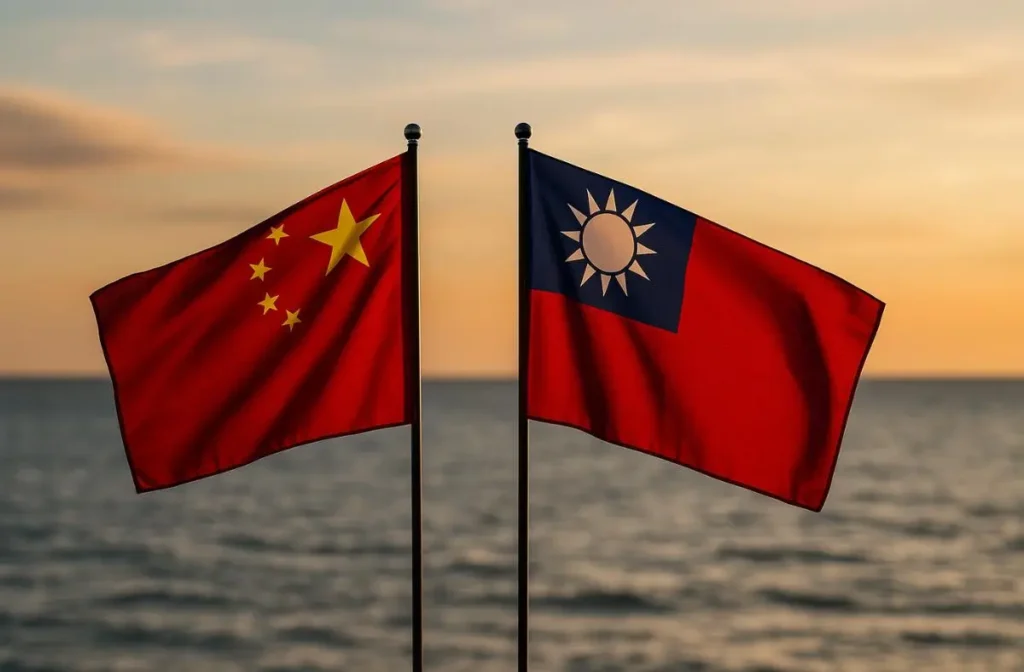
The China Taiwan conflict remains one of the most dangerous and enduring disputes in the international order. It is the point where sovereignty, identity, history, and power converge, shaping the security of Asia, the balance of the global economy, and the credibility of modern governance. For more than seven decades, the world has managed this question through ambiguity, fragile deterrence, and compromise. Yet no pathway has emerged that simultaneously secures dignity for Taiwan, legitimacy for China, and Taiwan Strait stability for the region.
This Awakened Leadership Compass Brief, grounded in the living intelligence of the Awakened Leadership model, philosophy, and frameworks, sets out that pathway. It is not a geopolitical bargain or a treaty of convenience. It is a structured solution anchored in clarity, awakened conscience, and systemic responsibility. It recognizes the legitimacy of lived identities and the necessity of security. It accepts the reality of economic interdependence as a permanent fact of survival. Above all, it insists that leadership and governance must evolve beyond control, and diplomacy beyond negotiation, both must become instruments of awakening, aligned with vision, dignity, and human-first values.
By applying the Awakened Leadership Compass, with its Four Pillars of Inner Vision, Heart-Centered Alignment, Life’s Essence, and Materiality, and its 4+1 Rhythm of Accept, See, Unite, Shift, and Improvise — this Brief presents a practical roadmap. It moves from immediate risk reduction to institutional trust-building, from functional cooperation to a long-horizon civic reconciliation process rooted in consent. It offers governments, institutions, and citizens a coherent strategy to transform one of the most volatile disputes in East Asia into a living example of dignity without domination.
Historical Evolution of the China Taiwan Dispute
The roots of the China Taiwan dispute stretch across centuries of empire, colonization, civil war, and shifting legitimacy. Taiwan’s place in history has never been neutral, it has always been a frontier where great powers, competing identities, and contested sovereignties intersected.
In 1895, after the First Sino-Japanese War, Taiwan was ceded by the Qing Dynasty to Japan. Half a century of Japanese rule left deep marks: modern infrastructure and administration were imposed, but so were repression and the shaping of a distinct Taiwanese memory. By the time World War II ended and Japan surrendered Taiwan in 1945, the island carried both the imprint of colonial development and the seed of a separate civic identity.
The Chinese Civil War transformed that history into a living fracture. In 1949, the Communist Party established the People’s Republic of China on the mainland, while the Kuomintang retreated to Taiwan, maintaining the Republic of China there. From that moment, two competing governments each claimed legitimacy over the whole of China. This unresolved duality is the core of the dispute.
During the Cold War, Taiwan was initially recognized by many states as the legal government of China. That changed in 1971 with United Nations General Assembly Resolution 2758, which recognized the People’s Republic of China as the sole representative of China in the UN system. Taiwan lost its UN seat and formal recognition, though it continued to survive and prosper through informal relations and international trade.
Since the 1980s, Taiwan has undergone one of the most successful democratic transformations in Asia. Its citizens now identify primarily as Taiwanese, not Chinese. This civic awakening has strengthened Taiwan’s claim to dignity and self-determination, even as Beijing continues to uphold the principle of “One China” and frames unification as a historic mission tied to sovereignty and national pride.
Today, the world faces a paradox. Taiwan functions as a vibrant, de facto independent state, but lacks international recognition. China holds overwhelming diplomatic and military weight, yet cannot resolve Taiwan by coercion without risking catastrophic conflict. The international community walks a tightrope of “strategic ambiguity,” seeking to deter war without closing the door to dialogue.
This historical evolution reveals why the dispute resists simple resolution. It is not only about territory, it is about identity, legitimacy, memory, and global order. Any solution that ignores this depth collapses into coercion. Any solution that honors it must provide dignity without surrender, legitimacy without humiliation, and governance without domination. That is the space where Awakened Leadership begins.
Perspectives and Narratives in the China Taiwan Conflict Solution
China’s Perspective
For Beijing, Taiwan is the unfinished mission of national unification. It is bound to sovereignty, territorial integrity, and the political legitimacy of the Chinese Communist Party (CCP). In Chinese statecraft, losing Taiwan would be a blow to national honor and a reopening of the century of humiliation by foreign powers. Reunification is presented not as a choice but as a historical destiny. This is why the “One China Principle” is declared as non-negotiable in official discourse.
Taiwan’s Perspective
For Taiwan, the struggle is about self-determination, democracy, and dignity. Once under martial law, Taiwan has transformed into one of Asia’s most vibrant democracies. Its citizens increasingly identify as Taiwanese rather than Chinese. For them, unification under Beijing’s current system would mean the loss of freedom, identity, and political voice. Taiwan’s position is not framed as provocation but as the defense of a lived civic reality.
United States and Allies
The United States views Taiwan through the dual lens of strategic deterrence and democratic credibility. Under the Taiwan Relations Act, the US commits to helping Taiwan defend itself without formally recognizing it as a sovereign state. Washington’s interest is not only in Taiwan’s democracy but also in the global economic and security stakes, particularly semiconductors and free navigation in the Taiwan Strait. Allies such as Japan and the European Union take similar stances, supporting stability while avoiding outright recognition of Taiwanese sovereignty.
United Nations and International System
Since UN General Assembly Resolution 2758 (1971), the UN recognizes the PRC as the sole representative of China. Taiwan has no UN seat and participates only in select international bodies under compromise names like “Chinese Taipei.” This creates a gap between Taiwan’s democratic reality and its absence in global governance. For the UN, the conflict is a test of legitimacy in the international order: whether peace and dignity can be secured without breaching foundational resolutions.
Regional Stakeholders
Southeast Asian nations and other regional actors prioritize stability and economic survival. Their trade, security, and social stability depend on peace in the Taiwan Strait. While they avoid taking explicit sides, they fear that any conflict would destabilize sea lanes, supply chains, and domestic politics. For them, neutrality is survival, but their silence also limits the pressure for a durable settlement.
Legal and Institutional Architecture of the China Taiwan Conflict Solution
The China Taiwan question has never been decided by arms alone. Its weight rests inside treaties, declarations, and resolutions that were drafted in moments of war and compromise, yet never closed the door with clarity. The architecture is less a foundation than a hall of mirrors, each document reflecting part of the truth, none of them resolving it.
The Cairo and Potsdam Declarations (1943–1945)
At the height of the Second World War, Allied leaders promised that Japanese-occupied territories, including Taiwan, would be restored to China after victory. These declarations were political pledges, not binding treaties. They gave hope to a nation humiliated by invasion, yet they left the legal chain fragile. What was promised in Cairo and Potsdam would later become the stage for arguments over intent versus enforceable law.
San Francisco Peace Treaty (1951)
When Japan surrendered its empire, it renounced sovereignty over Taiwan. But in one of the most consequential silences in modern diplomacy, the treaty never named the successor sovereign. This omission, some call it an oversight, others a deliberate ambiguity, created the legal vacuum in which two rival governments would plant their flags: Beijing’s new People’s Republic of China, and Taipei’s Republic of China in exile.
UN General Assembly Resolution 2758 (1971)
The Cold War brought the fracture into the chamber of the United Nations. In 1971, a majority voted to recognize the People’s Republic of China as the sole representative of China, expelling the Republic of China delegation from Taipei. It was a geopolitical earthquake: Beijing took China’s UN seat, including the permanent Security Council seat and veto, and Taiwan was left outside the system. Yet even this resolution carried its own silence. It never explicitly stated that Taiwan was part of the PRC. That omission has haunted diplomacy ever since, Taiwan erased from the UN, but not absorbed in law.
The Shanghai Communiqué (1972)
As Washington and Beijing sought alignment against Moscow, a new language emerged: the acknowledgment that “all Chinese on either side of the Strait” believe there is only one China. This phrase preserved ambiguity, satisfying Beijing’s need for unity while leaving space for Taiwan’s continued existence. It was not recognition; it was strategic ambiguity crafted as statecraft.
The Taiwan Relations Act (1979)
When the US shifted recognition from Taipei to Beijing, Congress refused to abandon Taiwan. The Taiwan Relations Act enshrined in American law the commitment to support Taiwan’s defense, including the sale of defensive arms and maintaining the U.S. capacity to resist coercion. It is domestic law, not international treaty, but it remains one of the most powerful instruments keeping the balance alive.
Cross-Strait Agreements (1990s–2000s)
In later decades, as Taiwan democratized, both sides struck functional deals on flights, tourism, and trade. These agreements brought glimpses of normalcy, planes flying, families visiting, economies connecting. But because they never touched the core question of sovereignty, they remained fragile, vanishing whenever political winds shifted.
Current Legal Dilemma
Taiwan is a functioning democracy with its own constitution, military, and economy. China is a recognized great power with a permanent UN seat and an unyielding claim. The UN recognizes Beijing as “China,” but international law never closed the question of Taiwan’s status. The result is the most precarious legal anomaly in the modern order: a people who govern themselves without recognition, and a power that claims them without jurisdiction. A functioning democracy without recognition, a great power with unfulfilled claims, and a global system that survives on deliberate silence.
Awakened Tension Map of the China Taiwan Conflict Solution
The China Taiwan question cannot be addressed through power calculations alone. It is a collision of identities, histories, and responsibilities. The Awakened Tension Map frames this conflict through two axes: Inner Alignment (identity, dignity, legitimacy) and Practical Responsibility (security, governance, prosperity, stability). Each actor holds a tension between these two forces, and peace requires their integration.
Taiwan
Taiwan carries strong inner alignment with democracy, dignity, and an evolving civic identity. It also faces high practical responsibility in defending its survival and sustaining economic vitality. Its tension lies in preserving identity while managing constant vulnerability.
China (PRC)
China emphasizes practical responsibility, tying sovereignty and unification to state legitimacy. Its inner alignment is bound to historical memory and the mandate of national unity. Its tension lies in reconciling global responsibility with rising nationalist pride.
United States and Allies
For the United States and its allies, practical responsibility dominates. Their focus is regional security, freedom of navigation, and economic stability. Inner alignment flows from values of democracy and human freedom, though tempered by realpolitik. Their tension lies in balancing commitments to Taiwan with the avoidance of direct confrontation with China.
United Nations and the International Community
The UN and broader international community align with peace, dignity, and self-determination. Yet they are constrained by the responsibility of preserving consensus in international law. Their tension lies in a silence that sustains fragile order while steadily eroding legitimacy.
Compass Insight
The Compass reveals a shared paradox. Taiwan cannot protect its identity without external responsibility. China cannot secure responsibility without honoring identity. Allies cannot safeguard order without confronting contradiction. The UN preserves consensus by remaining silent on Taiwan, but that very silence weakens its own legitimacy as the guardian of human dignity and self-determination. The Awakened frame insists that these tensions cannot be managed in fragments. Only by uniting dignity with responsibility can a sustainable solution emerge.
Bridge Analysis of the China Taiwan Conflict Solution
The Awakened Leadership Compass requires building bridges between levels of reality. Without bridges, tensions remain frozen in opposition; with bridges, they can move from conflict toward coherence. Each bridge reframes the relationship so that what divides becomes a point of connection.
Civilization ↔ Nations
China and Taiwan share deep civilizational roots yet express them through distinct political forms. The bridge lies in framing their relationship as a dual expression of one heritage rather than a contest of legitimacy. Civilization is broader than sovereignty, and nations can coexist within shared cultural continuity while maintaining distinct governance.
Governance ↔ Societies
Institutions must never overshadow the people they serve. Taiwan’s society expresses itself through democracy and civic freedom, while China’s governance prioritizes state unity and authority. The bridge lies in overlapping institutions that enable cooperation without absorption. Joint commissions on trade, environment, and digital security can respect societal differences while cultivating shared responsibility.
Institutions ↔ Organizations
Global institutions such as the UN, WTO, and WHO have excluded or marginalized Taiwan. Yet organizations across business, health, and civil society continue to engage it directly. The bridge lies in formalizing Taiwan’s participation in such organizations without defining it as sovereignty recognition. This dual participation reduces tension while strengthening legitimacy in global governance.
Human Intelligence ↔ Machine Intelligence
Disinformation, cyberwarfare, and AI-driven propaganda now shape the cross-strait dispute as much as ships and missiles. The bridge lies in joint frameworks for protecting digital truth. Both sides, supported by international partners, can agree on standards for data integrity, AI governance, and infrastructure security. This transforms technology from a weapon of division into a platform for survival, ensures that human discernment governs machine capacity, turning technology from an amplifier of division into a servant of survival.
Watch Explainer:
Awakened Leadership Framework Applied
The Awakened Leadership Model provides the inner compass and the outer embodiment of alignment for nations, governments, institutions, societies, and leaders. Its four pillars and 4+1 rhythm offer a living method to shift the China–Taiwan dispute from confrontation to transformation.
The Four Pillars
- Inner Vision
Decisions must rise from clarity of purpose, not reaction to pressure. For China, this means seeing unity not as coercion but as long-term coherence. For Taiwan, it means holding its democratic vision with dignity. For the world, it means guiding toward stability where dignity and peace align. - Heart-Centered Alignment
Policies must embody authenticity and respect. This requires dialogue without humiliation. Taiwan’s dignity must be protected. China’s historical wounds must be acknowledged. The heart-centered bridge ensures negotiations are not about dominance but about recognition of humanity. - Life’s Essence
Governance must remain adaptable without losing integrity. Cross-strait relations should evolve through experimentation, creating zones of cooperation that can expand with trust. This is resilience in motion, improvising in crises without abandoning principles. - Materiality
Declarations must translate into lived realities. Citizens on both sides must feel safety, prosperity, and connection. Agreements that remain on paper collapse; agreements that transform daily life endure. This requires budgets, institutions, and projects that anchor peace in daily experience.
The 4+1 Rhythm
- Accept: Accept the reality of division, tension, and mistrust without denial. Lay down arrogance and manipulation. Surrender to truth as it is, not as power distorts it. Accept reality in order to change it.
- See: See the legitimacy of each side’s perspective, and the risks of escalation. With clarity unobstructed, recognize what works, what fails, and what wounds remain. See the whole, the risks, the loopholes, and the bridges waiting to be built.
- Unite: Unite on common ground such as trade, public health, and ecological survival. Bring together what serves the common future. Gather the fragments that can cohere. Leave behind what cannot sustain dignity or peace.
- Shift: Shift from military deterrence to cooperative interdependence, from zero-sum sovereignty to shared stewardship. Move what is misaligned into alignment. Transform rivalry into responsibility, coercion into cooperation, and suspicion into trust.
- Improvise: Improvise in crises, creating flexible responses that uphold principles while managing volatility. Keep the system alive and open. Adapt with creativity, without losing principle. Respond to what emerges, knowing when to accept, when to unite, when to shift.
Applied together, these anchors and rhythms move the dispute from rigid positions to a dynamic, living process of reconciliation.
Strategy and Key Actions
A durable settlement requires three synchronized layers: near-term risk reduction, medium-term institutional trust, and long-term civic reconciliation. The center of gravity is joint ownership by both sides. External bodies are optional and limited to technical or financial support when both sides invite them.
Phase 1: Immediate Risk Reduction and Stability (0–24 months)
Objective: Stop accidents, lower miscalculation risk, and safeguard life-critical infrastructure while preserving face and core positions.
Mechanisms owned by both sides
- Direct hotlines for air and maritime encounters, with pre-agreed scripts, response times, and incident logs exchanged weekly.
- Rules of behavior at sea and in airspace modeled on existing international safety practices; both sides publish quick reference cards to operational units.
- Cyber and information crisis cell staffed by technical officers from both sides to triage cyber incidents, deepfakes, and information spikes that may trigger escalation.
- Strait Infrastructure Safety Mechanism (SISM): a public-private technical consortium for undersea cables, satellite redundancy, and rapid repair. Cable owners, insurers, and standards bodies lead; international agencies may attend as technical observers only if both sides agree.
- Continuity-of-Chips Compact: recognize semiconductors as peace infrastructure. Conduct joint continuity drills, secure spare parts, designate logistics corridors, and create an insurance pool for emergency restart. No IP sharing. No export-control debates inside this compact. For a deeper perspective on how semiconductors shape geopolitics and global leadership, see Semiconductor Geopolitics and the Future of Global Leadership.
- Time-bound moratorium on new missile deployments that change the balance inside the Strait, verified by commercially available satellite data and neutral technical institutes. No foreign inspections on bases.
- Deconfliction calendar: notify large exercises, missile tests, or major patrol surges at least 14 days in advance.
- Search-and-rescue and fisheries protocols to prevent civil incidents from becoming political crises.
- Public transparency bulletin every quarter summarizing hotline usage counts, near-misses prevented, cyber incidents triaged, and infrastructure repairs completed.
Why this works now
- It reduces risk without touching sovereignty.
- Verification relies on technical means and public reporting, not intrusive policing.
- Both societies see visible safety dividends in the first year.
Phase 2: Institutional Trust-Building and Functional Integration (2–10 years)
Objective: Build reliable, reversible scaffolding that improves daily life and creates habits of cooperation, without prejudging political status.
Instruments that do not settle status
- Dual Political Reality Declaration (DPRD): a time-limited, no-prejudice political truce freezing coercive moves while talks continue. It explicitly states it does not decide sovereignty, and it expires unless renewed by both sides.
- Strait Safety and Rights Panel (SSRP): a small, standing advisory panel of technical experts on safety, commercial conduct, and individual protections. It issues public recommendations; it does not adjudicate status or issue binding rulings. Eminent persons can be rotated in by mutual invitation.
- Mutual Interdependence Zones (MIZs) launched in practical sectors:
- Semiconductors: joint stewardship of continuity only, redundancy planning, emergency logistics, shared drills, neutral risk audits. Financing can flow through a multilateral financial vehicle acceptable to both sides.
- Public health: cross-strait disease surveillance nodes, data integrity standards, and coordinated outbreak simulations.
- Ecological resilience: joint disaster funds for typhoons, earthquakes, and coastal protection; shared early-warning and response playbooks.
- Maritime safety: incident prevention, salvage, and spill response standards.
- Semiconductors: joint stewardship of continuity only, redundancy planning, emergency logistics, shared drills, neutral risk audits. Financing can flow through a multilateral financial vehicle acceptable to both sides.
- Representative offices with quasi-consular functions: upgrade legal protections for premises, staff, and citizens via domestic statutes and bilateral notes. Keep names neutral; expand services in visas, notarials, and citizen assistance.
- Joint audits and neutral verification across MIZs: technical conformance checks conducted by mutually approved institutes, with summary findings published in both societies.
- Annual scorecard: a simple public ledger that tracks Phase-2 deliverables (drills held, repairs completed, days without major incidents, scholarship placements, disaster-response deployments).
Why this works
- It institutionalizes benefits people can feel, safety, health, jobs, without forcing constitutional conclusions.
- Public reporting grows legitimacy through sunlight, not through pressure.
Phase 3: Civic Reconciliation and a Consent-Based Horizon (10–30 years)
Objective: Heal narratives and create legitimate options for the future through sequenced, safeguarded civic processes. Time is an asset, not a delay.
Layered civic design
- Cultural and educational exchanges at scale: multi-year scholarship programs, city-to-city partnerships, public media co-productions, museum and archives collaborations that surface shared history with dignity.
- Citizens’ assemblies and deliberative polling: periodic, representative forums on security, trade, ecology, and identity questions. Outputs are non-binding but published to inform leaders and publics.
- Trusted civic-tech platforms: provenance-marked content, cryptographic signing for official statements, and verifiable voting tools for advisory polls to protect discourse from deepfakes and coordinated manipulation.
- People’s Reconciliation Charter (process, not one event): a staged blueprint that sets principles, timelines, and safeguards for any future decision, rights covenants, minority protections, transparent options, and pause clauses if conditions deteriorate.
- Conditions for any binding referendum (only if both sides consent, and only after safeguards have proven themselves over years):
- Mutual, written consent to conduct and recognize the process framework.
- Informed period with neutral explanatory materials and equal platform access.
- Security and rights guarantees in force before, during, and after the vote.
- Supermajority and turnout thresholds agreed in advance.
- Independent technical observation by institutes both sides jointly invite.
- Multi-stage sequencing to allow cooling-off, mediation, and verification between rounds.
- Mutual, written consent to conduct and recognize the process framework.
- Consent-based horizon: any constitutional change arises from explicit, demonstrable public consent, not coercion. Until then, the DPRD and functional cooperation continue to deliver stability and dignity.
Why this works
- It replaces “now or never” with a paced architecture that builds legitimacy.
- It keeps agency with both sides while offering optional, neutral support tools when invited.
Cross-Cutting Guardrails
- No coercion, no humiliation: language and actions that erode dignity are excluded from all instruments.
- Rights and protections first: treatment of persons, travelers, students, journalists, crews, receive priority safeguards.
- Reversibility and snap-back: any party may pause cooperation if safety is breached, with automatic mediation triggers.
- Data responsibility: information shared in MIZs is scoped, minimal, and protected; no pathway for status adjudication hidden inside technical cooperation.
- Face-saving communications: each side explains agreements in its own narrative, provided the technical core remains intact.
- External participation is optional: technical bodies, financial vehicles, or observers are invited only by mutual consent, for specific roles, and never to opine on status.
Verification and Public Reporting
- Primary method: non-intrusive, technical verification (commercial satellites, telemetry, audit trails) conducted by mutually approved institutes.
- Quarterly public bulletins summarizing safety metrics, drills, repairs, and program uptake.
- Independent repositories store evidence for historical transparency and to inoculate publics against misinformation.
The Annual Peace Dividend Ladder
Each year that milestones are met, unlock tangible benefits:
- Year 1: hotline metrics published; first cable redundancy drill; SAR protocol live.
- Year 2: semiconductor continuity drill; disaster-response fund activated; student exchanges doubled.
- Year 3: health surveillance nodes interoperable; quasi-consular protections expanded.
- Years 4–5: additional MIZs online; maritime safety incidents trend downward; joint annual safety review.
- Years 6–10: Reconciliation Charter principles adopted; citizens’ assemblies embedded; public trust measures rise.
Core Idea, made explicit
This architecture is designed so both sides solve their own problems together. External actors appear only where both invite them, and only to provide technical safety, neutral verification, or financing that neither side can provide alone. Status questions are frozen, dignity is protected, life-critical systems are guarded, and legitimacy grows through public transparency and consent-based processes.
This is Awakened Diplomacy in practice: security anchored in responsibility, identity honored through consent, and progress measured in lives made safer every single year.
Final Axis: The Awakened Leadership Ecosystem
While this Brief has proposed practical, staged steps specific to the China–Taiwan dispute, Awakened Leadership offers a broader ecosystem that any nation, institution, or society can draw upon. These are not imposed formulas but living instruments that can be adapted to context while keeping dignity, responsibility, and human values at the center.
- Awakened Leadership Charter — a statement of awakened conscience that enshrines peace, legitimacy, and human-first values as guiding lights in governance.
- Awakened Leadership Manifesto — a collective voice calling systems and leaders back to vision, dignity, and responsibility.
- Awakened Leadership Constitution — a universal framework for rights, consent, and systemic alignment that can inspire or complement national frameworks.
- Awakened Leadership Decision Framework — a practical compass for leaders, ensuring choices are tested against clarity, conscience, resilience, and materiality.
- The Awakened Leadership Model — the living rhythm of transformation through its Four Pillars and 4+1 Steps.
This is the operative code of Awakened Leadership and Awakened Governance, clear, enforceable, and ready for leaders, nations, systems, societies, and organizations willing to lead awakened.
Policy and Action Levers
Every durable framework requires clarity of responsibility. In an Awakened settlement, China and Taiwan hold the center of gravity, while external actors appear only by mutual invitation and only in technical or financial support roles. This section outlines the levers available to each actor within that awakened architecture.
For China
- Honor restraint through the DPRD: treat the time-bound freeze not as weakness but as proof of long-term strength.
- Harvest economic dividends from cooperation: present MIZ projects and semiconductor continuity as domestic victories that secure jobs, stability, and resilience.
- Reframe global role: show the world that unity can be achieved through patience and stewardship, not coercion.
For Taiwan
- Protect democracy through resilience first: strengthen domestic safeguards so guarantees, when needed, are backstops not crutches.
- Engage MIZs without concession: demonstrate that Taiwan can cooperate regionally while dignity and self-rule remain intact.
- Prepare reconciliation through consent: build internal processes and civic trust mechanisms so any future choice is legitimate, voluntary, and unshakable.
For the United Nations and Multilateral Platforms (optional, when invited)
- Act as convener, not arbiter: host dialogues or panels only when both sides agree, keeping sovereignty questions off the table.
- Provide technical support: assist in infrastructure protection, disaster response, or health surveillance as neutral capacity-builders.
- Publish transparent reports: offer neutral data that strengthens trust internationally without dictating outcomes.
For the United States and Allies (optional, when invited)
- Calibrate security signals: ensure defense support deters coercion but avoids provocation.
- Underwrite resilience mechanisms: fund insurance pools, disaster funds, or semiconductor continuity vehicles that benefit both sides equally.
- Make peace profitable: balance deterrence with incentives, proving that cooperation yields more tangible gains than rivalry.
For any framework to endure, principles must be matched by resources. Action gains legitimacy only when it is resourced into reality. The next section outlines how budgets and funds can anchor cooperation so peace is not abstract but lived.
Budgetary and Resource Considerations
Peace and reconciliation cannot be sustained by words or protocols alone. They require visible resources that prove cooperation is real, practical, and beneficial. Budgets must not only fund deterrence but also invest in trust, so both societies see peace in their daily lives.
Mutual Interdependence Zones (MIZs)
Semiconductors and Technology
Create a Joint Continuity and Resilience Fund for semiconductor infrastructure. Funding flows primarily from Taiwan’s private sector and Chinese state enterprises, with contributions from regional partners. Management rests with a neutral trustee, such as the Asian Development Bank, if both sides consent. The fund finances redundancy drills, spare-part stockpiles, and emergency restart capabilities, protecting the sector as shared survival infrastructure rather than a zero-sum prize.
Ecological Resilience
Establish a Cross-Strait Disaster Fund to address typhoons, earthquakes, and coastal risks. Both sides co-finance, with optional regional contributions. Funds are deployed for early warning, rapid response, and post-crisis rebuilding. Ownership remains bilateral, but neutral financial institutions can administer disbursement if mutually agreed.
Public Health
Launch joint surveillance and response nodes, co-hosted in Taipei and Shanghai. These nodes share anonymized data, run coordinated outbreak simulations, and co-publish findings. WHO or other international agencies may observe in a technical capacity, but only if both sides invite.
Infrastructure Protection
Form a Strait Infrastructure Safety Pool funded by telecom operators, insurers, and both governments. The pool covers redundancy for undersea cables, satellite backups, and rapid repair. Neutral technical observers may participate if both sides approve, but operational control remains local.
Peace Dividend Mechanism
Create a Peace Dividend Ladder that releases additional funding each year milestones are verified. Verification relies on transparent technical evidence, not political oversight.
- Year 1: fund continuity drills and disaster-response readiness.
- Year 2: expand student exchanges and health simulations.
- Year 3+: scale ecological and maritime safety projects.
This mechanism ensures that stability delivers visible benefits. The longer peace holds, the greater the dividend released to both societies.
Core Principle
Budgets are not side notes, they are anchors of trust. By keeping funding ownership in the hands of China and Taiwan, and by allowing external institutions to act only as neutral trustees when both sides agree, this framework protects sovereignty while proving that cooperation pays.
In Awakened Global Governance, Awakened Political Governance, and Awakened Diplomacy, resources become instruments of wisdom and patience, courage and clarity. They embody human values and expand possibilities, turning cooperation into lived stability rather than tools of leverage, coercion, or manipulation.
Risks and Mitigations
Military Escalation
Risk: Miscalculation or deliberate provocation ignites conflict.
Mitigation: Pre-agreed rules of behavior and tested hotlines reduce accidents. Drills run jointly by both sides build trust. Neutral data sources, if mutually invited, provide transparency without intruding on sovereignty.
Political Hardliners
Risk: Nationalists in either society portray restraint as betrayal.
Mitigation: Protect dignity on both sides through transparent communication. Use civic platforms, assemblies, and open media to show that cooperation strengthens identity rather than erodes it.
International Spoilers
Risk: External powers exploit the dispute for their own gain.
Mitigation: Keep ownership bilateral. External institutions participate only when invited and only in technical or financial roles. Make peace dividends visible to both sides so neither is vulnerable to manipulation.
Misinformation and Cyberwarfare
Risk: AI-driven propaganda erodes civic trust.
Mitigation: Create joint task forces for cyber incidents and content integrity. Fund civic-tech platforms and media literacy programs within both societies, ensuring that truth remains a shared defense rather than a weapon.
Economic Vulnerabilities
Risk: Sanctions, blockades, or economic shocks undermine trust.
Mitigation: Safeguard critical trade corridors through jointly agreed protocols. Tie any relief or assistance mechanisms directly to compliance with stability agreements, keeping the incentive structure aligned with peace.
Humanitarian Crises and Natural Disasters
Risk: Earthquakes, typhoons, or pandemics spark humanitarian emergencies that are politicized, blocking aid and fueling mistrust.
Mitigation: Pre-agree “red zones of cooperation” — disaster relief, humanitarian corridors, and medical aid are exempt from political disputes and handled through joint emergency protocols.
Leadership Transitions and Political Shocks
Risk: Sudden leadership changes, assassinations, or sharp ideological shifts reverse commitments overnight.
Mitigation: Institutionalize agreements into standing mechanisms, hotlines, MIZs, scorecards, so they survive beyond any one leader, party, or election.
Implementation Roadmap
Years 0–2 | Immediate Stability and Safety
- Activate direct hotlines for air, sea, and cyber incidents, with joint drills to test response times.
- Publish rules of behavior for encounters at sea and in airspace, distributed to operational units.
- Launch the Strait Infrastructure Safety Mechanism (SISM): joint technical consortium for undersea cables, redundancy, and rapid repair.
- Conduct the first Continuity-of-Chips Compact drills, securing spare parts and logistics corridors.
- Issue a time-bound moratorium on new missile deployments, verified by neutral technical data (satellites, audit trails).
- Release the first public transparency bulletin (near-misses prevented, cyber incidents triaged, drills conducted).
Years 2–5 | Institutional Trust-Building
- Sign the Dual Political Reality Declaration (DPRD) — freezing coercive moves without touching sovereignty.
- Establish the Strait Safety and Rights Panel (SSRP) — technical, advisory, and public, not political.
- Pilot Mutual Interdependence Zones (MIZs) in semiconductors, public health, and ecological resilience.
- Upgrade representative offices into quasi-consular missions with enhanced protections for staff and citizens.
- Introduce the first joint audits and neutral verification reports across MIZs.
- Publish the Annual Peace Dividend Scorecard, tracking drills, exchanges, disaster deployments, and safety milestones.
Years 5–10 | Expansion and Deep Integration
- Scale MIZs into new domains (maritime safety, cultural cooperation, advanced disaster resilience).
- Institutionalize the Peace Dividend Ladder, releasing incremental benefits with every verified year of stability.
- Embed citizens’ assemblies and deliberative forums into the cross-strait process, giving public structured participation.
- Launch large-scale cultural and educational exchanges, city-to-city partnerships, and joint historical projects.
- Draft the People’s Reconciliation Charter, outlining civic principles, safeguards, and staged options for future relations.
Years 10–30 | Civic Reconciliation and Consent-Based Horizon
- Institutionalize civic-tech platforms to safeguard public discourse against deepfakes and manipulation.
- Conduct multi-stage reconciliation processes, including deliberative polling and advisory civic referenda (binding only if both sides consent and safeguards are proven).
- Implement outcomes incrementally, protecting dignity, rights, and consent at each stage.
- Hold parliamentary exchanges and formalize cross-strait civic cooperation as standing institutions.
- Preserve snap-back clauses: any side may pause if safety or dignity is breached, with automatic mediation triggers.
The sequence outlined here is a compass, not a clock. Timelines and milestones remain subject to mutual consent and situational realities, yet within this flexibility both sides carry an uncompromising responsibility to honor the order of progress and to meet commitments in the spirit of clarity, peace, and a shared future.
Communication Playbook
For Taiwan
- Frame agreements as safeguards for democracy and dignity, not concessions.
- Reaffirm that sovereignty remains with citizens, and any change arises only through explicit consent.
- Use open communication to build trust, showing that cooperation strengthens identity and resilience.
For China
- Present the DPRD as proof of maturity, restraint as strength, not weakness.
- Frame MIZs as constructive steps toward national coherence built on patience and responsibility, not force.
- Highlight economic dividends and stability as domestic victories that honor historical continuity without risking instability.
For the World
- Emphasize risk reduction as a global public good that protects stability, trade, and peace.
- Present Taiwan’s functional participation in global organizations as necessary for resilience, not as a sovereignty decision.
- Shift narrative from zero-sum rivalry to fairness, dignity, and cooperative order.
For the United Nations
- Present the framework as an example of adaptive global governance, where peace is built through responsibility and inclusion rather than silence.
- Use this as a demonstration that the UN can protect dignity and prevent conflict by enabling cooperation without forcing political outcomes.
Communication must mirror the essence of Awakened Leadership, clarity without provocation, dignity without dominance, truth without humiliation. This is Awakened Diplomacy in practice and Awakened Global Governance in form: a language of patience, vision, and human-first responsibility that turns fragile arrangements into durable peace.
Transmission Statement
Dignity preserved, coercion halted, the future chosen by consent. The China–Taiwan question does not demand war; it demands awakened leadership.
Conclusion
This Brief is the first attempt to resolve the China–Taiwan dispute through the lens of Awakened Leadership. It unites history, law, politics, economics, and technology with a deeper ethic of governance grounded in awakened conscience, clarity, and responsibility.
It replaces rivalry with rhythm, confrontation with cooperation, and fear with a framework of dignity and consent. For China and Taiwan, it offers a covenant of restraint and recognition. For the world, it proves that governance can evolve beyond power into awakened responsibility.
This is an operational architecture: declarations, institutions, budgets, civic processes, and trust-building measures. It stands as both a policy roadmap for governments and a manifesto for humanity. The Strait can remain a line of division, or it can become a bridge of unity without uniformity. The choice belongs to those who lead.
Closing Call
This Brief is a beginning, not a conclusion. It is a living framework, open for refinement and adaptation by nations, institutions, leaders, and citizens. Its strength lies in the invitation to co-create a future anchored in dignity and responsibility.
As the Global Pioneer of Awakened Leadership, Awakened Governance, and Awakened Diplomacy, I, SunDeep Mehra, founder of the Awakened Leadership Movement and author of the Awakened Leadership Constitution, call on nations, organizations, and societies to deepen their understanding through the Awakened Leadership Complete Guide and to Explore the Awakened Leadership Movement as pathways for peace and systemic coherence.
The Awakened Leadership Compass Tool guided this effort, the first of its kind, demonstrating how awakened clarity can be applied to the hardest conflicts of our age. It remains open to enrichment by the wisdom of leaders and communities worldwide.
This is a possibility for nations to rediscover courage, patience, compassion, and vision as instruments of governance. It is an opportunity for humanity to choose peace, dialogue, and awakening over rivalry, silence, and collapse.
The Awakened Leadership Movement extends this invitation: explore it, contribute to it, and carry this vision forward. To stay connected and take part in this unfolding journey, follow us on LinkedIn and X.